Dental Extraction:
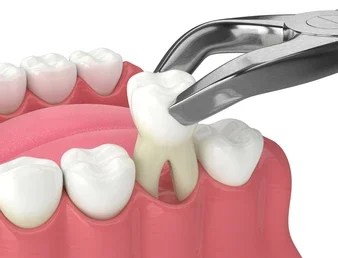
Dental extraction, commonly known as tooth extraction, is a dental procedure aimed at removing a tooth from its socket in the jawbone. This procedure is typically performed by a dentist or an oral surgeon.
Reasons for Dental Extraction:
Dental extractions may be necessary for various reasons, including:
- Decayed or Damaged Teeth: Teeth that are severely decayed or damaged beyond repair may need to be extracted to prevent further oral health complications.
- Crowded Teeth: If there is insufficient space in the jawbone to accommodate all the teeth, extraction may be necessary to create room for proper alignment through orthodontic treatment.
- Gum Disease: Advanced stages of gum disease can result in loose teeth that may require extraction to prevent the spread of infection to surrounding teeth and bone.
- Impacted Wisdom Teeth: Wisdom teeth, or third molars, often lack sufficient space to emerge properly. When they become impacted (partially erupted or unable to erupt), extraction is often recommended to avoid pain, infection, and potential damage to adjacent teeth.
Postoperative Home Care Instructions:
After a dental extraction, it is crucial to follow these postoperative instructions for optimal healing and to minimize complications:
- Minimize Physical Activity: Avoid rigorous physical activities for the first 24 hours to allow blood clot formation and decrease bleeding.
- Bite on Gauze: Bite down gently on the provided gauze pad to control bleeding. Change the gauze as necessary , every 15 to 20minutes only . Avoid frequent changing of the gauze as this will not allow blood clot to form and slow down.
- Apply Ice Packs: Place ice packs externally on the cheek near the extraction site for the first 24 hours to reduce swelling and discomfort.
- Take Prescribed Pain Medication: If prescribed, take pain medication as directed by your dentist to manage any post-extraction discomfort.
- Avoid Rinsing or Spitting: Avoid rinsing your mouth, using straws, or spitting forcefully for the first 24 hours, as these actions may dislodge the blood clot and delay healing.
- Only rinse with Cool salt water or Mouthwash after meals. Do NOT keep rinsing vigorously as this dislodge blood clot and cause more bleeding.
- Eat Soft Foods: Stick to a soft food diet for the first few days, gradually reintroducing solid foods as tolerated .
- Maintain Oral Hygiene: Brush gently around the extraction site after 24 hours, being cautious not to disturb the blood clot
- AVOID SMOKING AND DRINKING AlCOHOL.
Mild bleeding is common for up to 24 hours, with some oozing potentially lasting for a few days. However, if bleeding is excessive or persistent beyond 24-48 hours, it’s important to contact us.
 Dr Naidu's Dental & Medical Clinic- Nadi , Fiji